Blockchain News

How Liquidity Pools Power DeFi: A Complete Guide for 2025

How DeFi Trading Really Works: The Engine Behind the Scenes


Decentralized Finance (DeFi) promises open, permissionless trading. But without traditional market makers, how do these platforms ensure you can always buy or sell? The answer isn't magic—it's mathematics and incentive design. This guide demystifies the core innovation enabling this: Automated Market Maker (AMM) liquidity pools. We'll move beyond basic definitions to analyze their real-world function, the financial incentives for participants, and the evolving risks in the current regulatory landscape.


Order Books vs. AMMs: Why Blockchain Demanded a New Model


Traditional finance relies on the order book model. Buyers and sellers place limit orders, and matches occur when prices align. This requires high-frequency, low-cost transactions and active professional market makers—conditions incompatible with early blockchain throughput and cost (gas fees). Ethereum's congestion highlighted this flaw, creating a need for a more efficient, automated solution. Automated Market Makers (AMMs) emerged as that solution, replacing order matching with algorithmic liquidity pools.


Deconstructing a Liquidity Pool: Tokens, Shares, and Price Algorithms


A liquidity pool is a smart contract holding reserves of two or more tokens. Unlike a broker, it doesn't find a counterparty for your trade. Instead, you trade directly against this pooled reserve. The price for each token is determined by a constant mathematical formula, the most common being the Constant Product Market Maker (x * y = k) used by Uniswap V2. This algorithm ensures the pool can provide liquidity at any price point, though with variable slippage.


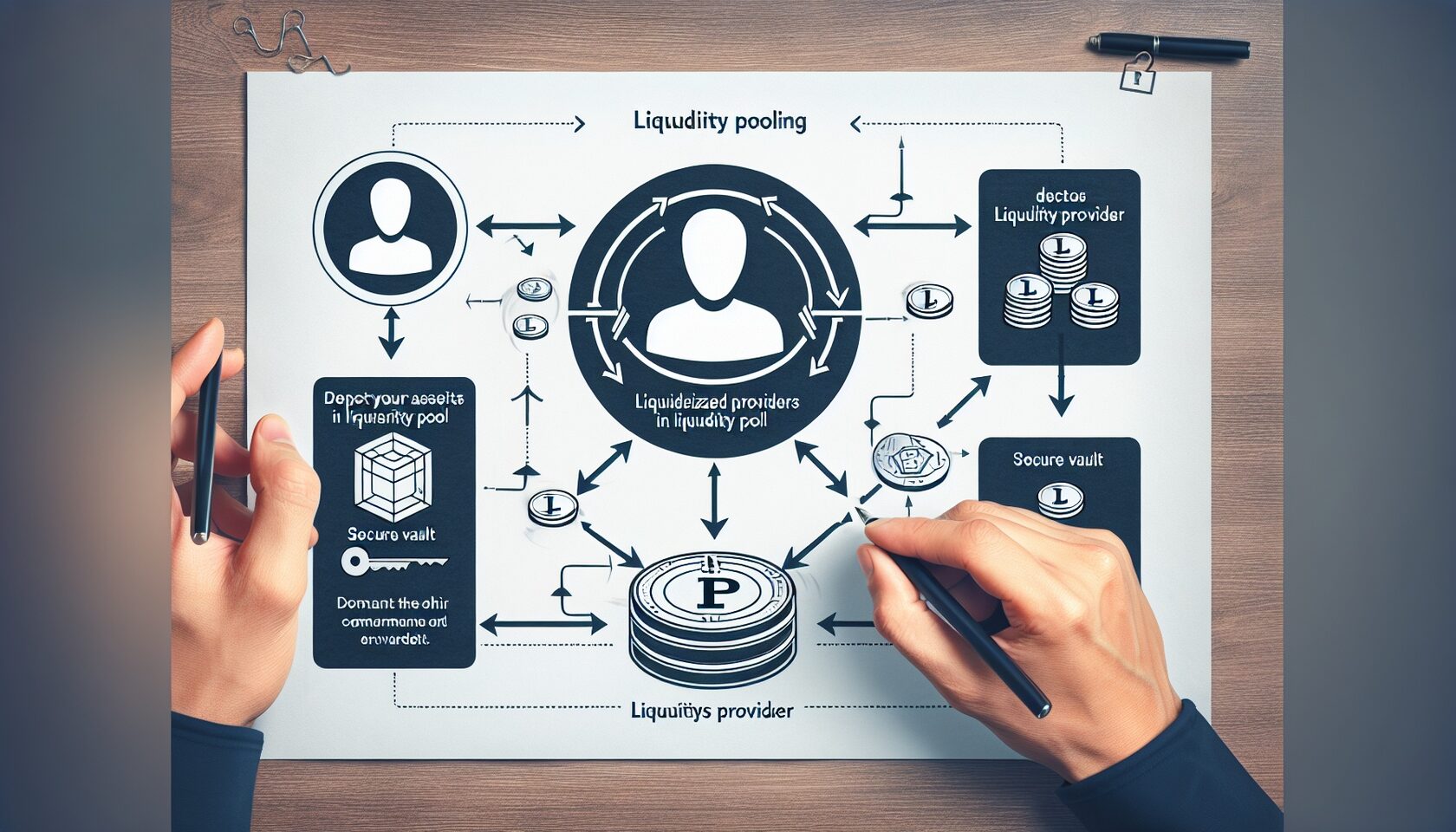
When you provide liquidity, you deposit an equal value of two tokens (e.g., ETH and USDC) into the pool's reserve. In return, you receive Liquidity Provider (LP) tokens. These are your proof of stake and are crucial. They represent your proportional share of the entire pool's reserves and accumulate trading fees (typically 0.01% to 0.3% per swap).


The Critical Role of Initial Price and Pool Ratios


The first provider to a new pool sets the initial price by depositing tokens at a ratio they believe reflects the market rate. All subsequent depositors must respect this ratio to avoid immediate arbitrage losses. This mechanism bootstraps a new market without a central authority setting the price.


Advantages and Strategic Incentives for Liquidity Providers


Providing liquidity offers several compelling benefits, which explain its rapid growth:


Passive Income from Trading Fees: Every swap charges a fee, distributed pro-rata to all LP token holders. In high-volume pools, this can generate significant yield.


Liquidity Mining Rewards: Many protocols incentivize liquidity for new tokens by distributing additional governance or utility tokens to LPs—a practice known as yield farming.


Permissionless Access: Anyone can become a market maker. There are no gatekeepers, KYC checks, or listing fees, democratizing a role traditionally reserved for large institutions.


Capital Efficiency with Concentrated Liquidity (Uniswap V3): Modern iterations allow LPs to allocate capital within specific price ranges. This increases fee earnings on that capital but introduces complex management and heightened risk.


Navigating the Inherent Risks: Beyond Smart Contract Bugs


While lucrative, providing liquidity is not free of risk. Understanding these is non-negotiable for responsible participation.


Impermanent Loss (Divergence Loss): This is the foremost financial risk. It occurs when the price ratio of your deposited tokens changes compared to when you deposited them. The larger the divergence, the greater the loss compared to simply holding the assets. Concentrated liquidity amplifies this risk.


Smart Contract Risk: The pool's code is law. Vulnerabilities can lead to the loss of all locked funds. Audits reduce but do not eliminate this risk.


Composability & Protocol Risk: In yield farming, LP tokens are often staked in other protocols to earn extra rewards. This "DeFi Lego" stack increases returns but also layers risk from each additional smart contract.


Regulatory Uncertainty: The regulatory status of liquidity provision and yield farming is evolving globally. Providers should be aware of potential tax implications and regulatory scrutiny in their jurisdiction.


Disclaimer: Not Financial or Legal Advice


This analysis is for educational purposes only. Liquidity provision and yield farming involve substantial risk of loss, including the potential loss of all invested capital. You should conduct your own due diligence, consult with a qualified financial advisor, and understand the regulatory obligations in your country before participating in any DeFi protocol. Past performance is not indicative of future results.


The Future of Liquidity: Where Are Pools Heading?


The evolution from Uniswap V1 to V3 shows a clear trend toward greater capital efficiency and specialized risk/return profiles. Future developments will likely focus on cross-chain liquidity, improved impermanent loss mitigation mechanisms (e.g., through options), and more sophisticated risk management tools for LPs. As blockchain scalability improves with Layer 2 solutions, we may even see hybrid models that combine AMM efficiency with order-book-like precision. The core principle—decentralized, algorithmic liquidity—is now a permanent fixture of the financial landscape.