Beyond Betting: The Information Engine
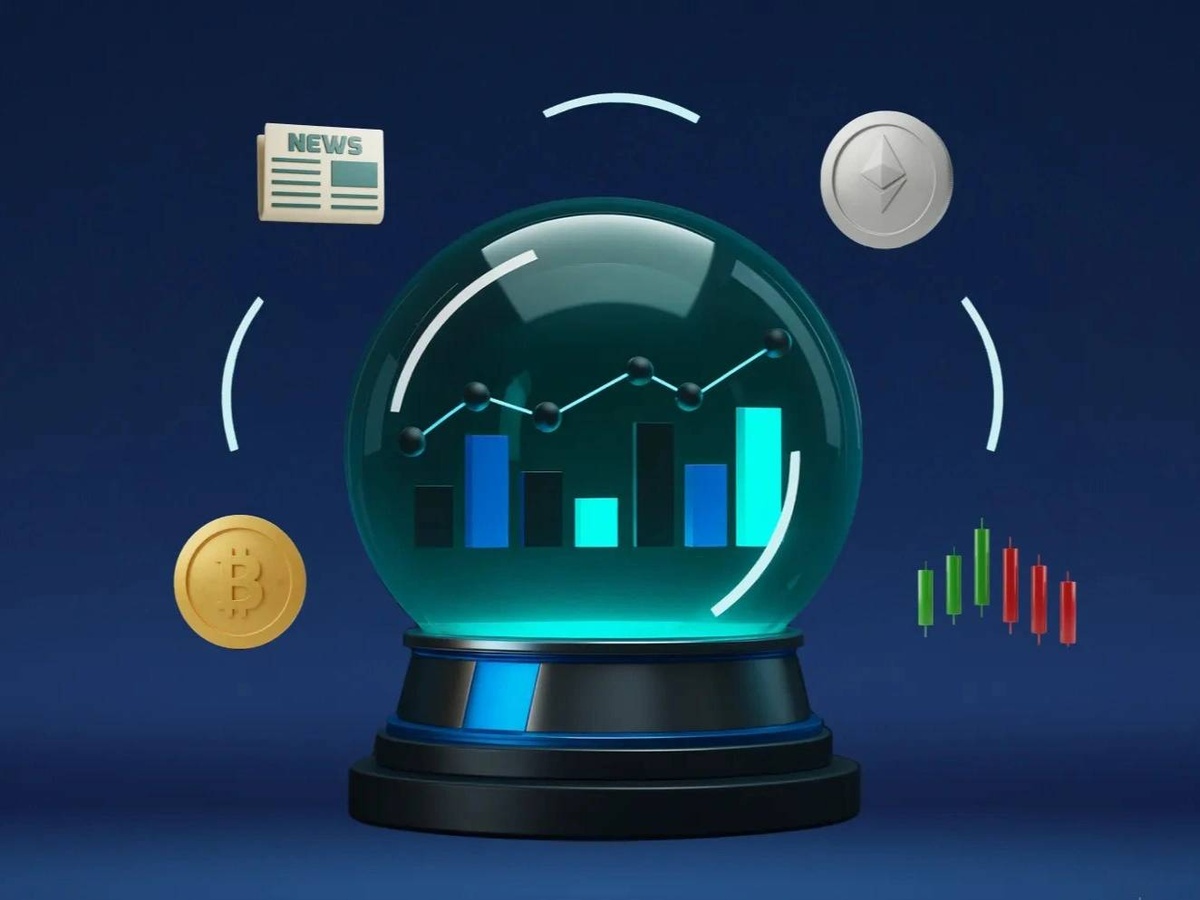
Forget sportsbooks. We're building global, incorruptible crystal balls.
Decentralized Prediction Markets (DPMs) are not gambling dens. They are sophisticated information aggregation engines built on blockchain technology. By allowing participants to trade shares in the outcome of future events, they transform speculative energy into a powerful forecasting tool.
The price of a "YES" share becomes a real-time probability estimate, refined by the collective's wisdom and financial incentive to be right.
The Core Proposition: Wisdom of the Crowd, Incentivized
The principle is elegant. It applies the Efficient Market Hypothesis to any conceivable future event.
Participants buy and sell outcome tokens. If correct, their tokens redeem at full value. If wrong, they expire worthless. This financial stake forces participants to reveal their true beliefs, distilling vast amounts of dispersed information into a single, tradeable price signal.
It’s capitalism for clairvoyance.
How It Works: A Four-Act Play
The entire lifecycle is automated by smart contracts, removing human intermediaries and bias.
Market Creation
A user deploys a contract defining the event, possible outcomes, and the trusted data source (oracle) for resolution. For a binary event like an election, the contract mints "YES" and "NO" shares.
Trading & Price Discovery
Participants trade these shares, typically using stablecoins. As buying and selling pressure shifts, so does the price. A "YES" share trading at $0.75 implies a 75% market-assigned probability.
Resolution & Payout
Once the real-world event occurs, an oracle reports the result. The smart contract automatically settles: winning shares redeem (e.g., for $1 each), losers zero out.
The Technological Trinity: Smart Contracts, Oracles, Self-Custody
This trustless system rests on three pillars.
Smart Contracts are the immutable rulebook and automated referee. They hold funds, facilitate trading, and execute payouts with cryptographic certainty.
Oracles are the critical bridge to reality. Protocols like Chainlink or UMA feed verified off-chain data (election results, sports scores) to the on-chain contract. Their security is paramount—a compromised oracle breaks the market.
Self-Custody & Transparency is the non-negotiable advantage. Users interact from their own wallets; funds never leave their control. Every transaction and rule is recorded on a public ledger, eliminating the opacity of traditional bookmakers.
Trading Mechanics: AMMs vs. Order Books
Liquidity is vital. Platforms use two primary models.
- Automated Market Makers (AMMs): Used by leaders like Polymarket. Traders swap tokens against a pooled liquidity reserve governed by an algorithm (e.g., Constant Product Formula). This provides continuous liquidity but exposes providers to impermanent loss.
- Order Books: Used by platforms like Augur and Overtime. This traditional model matches specific buy and sell orders. It offers precise pricing but requires counterparties for every trade.
The New Corporate Convergence (2025+)
The landscape shifted fundamentally in late 2025. Major regulated players entered the arena, validating the technology while bridging it with traditional finance.
On December 1st, Kalshi, a CFTC-regulated exchange, launched tokenized event contracts on Solana.
Two days later, Fanatics, the sports merchandise giant, launched its centralized prediction market app in ten U.S. states.
This isn't just crypto anymore. It's mainstream infrastructure.
Ecosystem Snapshot: Platforms & Protocols
The ecosystem has matured into distinct layers: consumer-facing platforms and developer infrastructure.
Leading Platforms
- Polymarket: The liquidity leader on Polygon, covering politics, crypto, and current events via an AMM model.
- Augur: The Ethereum pioneer utilizing an order-book model and a decentralized oracle system powered by its REP token.
- Overtime: A specialized Web3 sportsbook built on Thales protocol (Optimism/Arbitrum).
Infrastructure Backbones
- Azuro: An infrastructure layer with a "Liquidity Tree" model to boost capital efficiency for app builders.
- Monaco Protocol: A Solana-based backend providing shared global liquidity for prediction apps, designed to prevent front-running.
The Final Wager
Decentralized Prediction Markets represent a fundamental upgrade to how societies process uncertainty. They move forecasting from closed boardrooms to open, incentivized networks where truth has a tangible market price.
The convergence with regulated entities in 2025 signals not a co-opting but a maturation. The question is no longer if this technology will reshape forecasting—it's which aspects of our future we will choose to illuminate with it first.
What global event would you most want to see priced by an unbiased crowd?
Disclaimer: This article is for informational and educational purposes only regarding emerging blockchain technology.It does not constitute financial advice,endorsement of any platform or asset or encouragement to participate in prediction markets which may be subject to legal restrictions in your jurisdiction.