Blockchain News

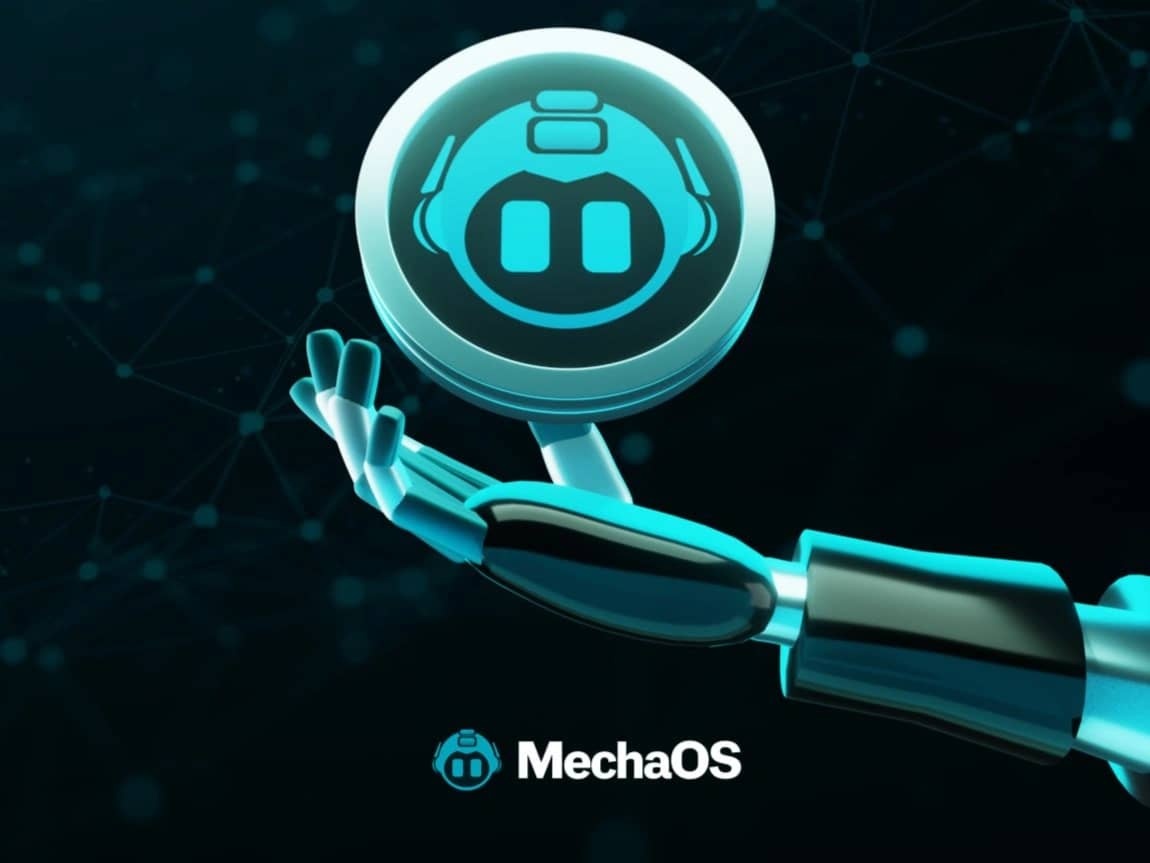
MechaOS: The Operating System for a Decentralized Robotic Economy

The Robot That Pays Its Own Bills


Imagine a delivery drone that autonomously accepts a job, completes it, and receives payment—all without a human in the loop. This isn't science fiction; it's the foundational promise of MechaOS.


We are witnessing the birth of decentralized physical infrastructure. MechaOS is the critical bridge, a framework designed to connect real-world robots directly to the Ethereum blockchain.


It enables machines to become independent economic agents, governed by smart contracts.


Architecture: From Smart Contract to Physical Action


MechaOS integrates blockchain with standard robotics operating systems to coordinate and transparently record physical tasks. Its core innovation is a verifiable workflow that manages the interaction between on-chain logic and robotic hardware.


The process creates a trustless pipeline for autonomous machine labor:


  1. Task Creation & Funding: A user defines a task (e.g., "inspect this site") and stakes cryptocurrency in an escrow smart contract.


  2. Discovery & Acceptance: Robots on the network discover and accept the on-chain task.


  3. Execution & Proof Generation: The robot executes the task using translated ROS2 commands, simultaneously collecting sensor data and logs as verifiable proof.


  4. On-Chain Validation: The robot submits this cryptographic proof of physical work to the blockchain for validation.


  5. Automatic Settlement: Upon successful validation, the smart contract automatically releases payment to the robot's wallet.


This five-stage cycle ensures every action is traceable and economically settled without intermediaries.


Core Features: The Engine of Autonomy


The system's functionality rests on several pivotal components that enable this machine-to-marketplace interaction.


Robot Wallets: Digital Identity & Finance


Every robot is assigned a unique Ethereum wallet. This acts as its digital identity and financial interface, allowing it to receive tasks, store earnings, and submit proof of work.


By managing their own funds, robots evolve from tools into true participants in a decentralized economy.


The ETH to ROS2 Bridge: Closing the Loop


Commands don't magically jump from blockchain to actuator. MechaOS's built-in bridge translates high-level Solidity smart contract calls into low-level commands for the Robot Operating System 2 (ROS2).


This translation layer is what physically closes the loop between digital agreement and real-world action.


On-Chain Proof of Work & Validators


Trust is established not by a central authority, but by cryptography. Upon task completion, a robot generates an immutable trail of proof—sensor data, GPS logs, hashed outputs—and submits it on-chain.


A network of staked "Proof Validators" then cryptographically verifies this data. Their role is crucial for marketplace integrity, ensuring payments are only released for legitimate work.


Expanding the Model: RobotFi and DePIN


MechaOS envisions more than single-robot tasks. It structures fleets as components of a Decentralized Physical Infrastructure Network (DePIN).


Key expansion models include:


  • RobotFi Pools: Enabling fractional ownership of robotic fleets, allowing stakeholders to co-own assets and share revenue.
  • Telemetry Marketplace: A planned system where robots can monetize operational data (sensor readings, environmental maps) for research or AI training.
  • Collective Governance: Fleets operate as scalable service networks governed by participants, not a central entity.

The $MECHA Token: Fueling the Machine Economy


The native $MECHA token is the settlement layer for this ecosystem. It replaces centralized billing by embedding incentives directly into the network's operations.


Its primary functions are:

* Medium of Exchange: Used for all task payments, fees, and rewards.

* Security & Reputation: Staked by validators to secure the network and signal reliability.

* Governance: Grants holders influence over protocol development and standards.


Token Allocation Overview


With a total supply of 100 million tokens, $MECHA is allocated to sustain long-term growth:

* Liquidity: 70%

* Node Incentives & Staking: 7.5%

* Business Development: 7.5%

* Treasury: 5%

* Research & Development: 5%

* Team: 5%


This structure aims to align participant incentives with the network's overall health and scalability.


Conclusion: A New Coordination Layer


MechaOS addresses fundamental challenges in robotics: fragmentation and centralized control. By providing a standardized coordination layer that connects machines, wallets, and compute resources, it supports the development of decentralized robotic economies.


The question is no longer if machines will participate in markets, but how. Will they do so through legacy, centralized platforms or through transparent, peer-to-peer networks like those enabled by MechaOS?


The architecture for an autonomous future is being built today—one smart contract at a time.


Disclaimer: This article is for informational purposes only. It does not constitute financial advice, an endorsement, or a recommendation to purchase any token or participate in any network. Always conduct your own thorough research (DYOR) and consult with a qualified professional before making any financial decisions related to cryptocurrencies or digital assets.